Load Stage vendors vs. world loot
How to think about vendors, crafting, and raids when filling Combat, Survival, Provisions, and Materials buckets - without a verified vendor price list in this repo.
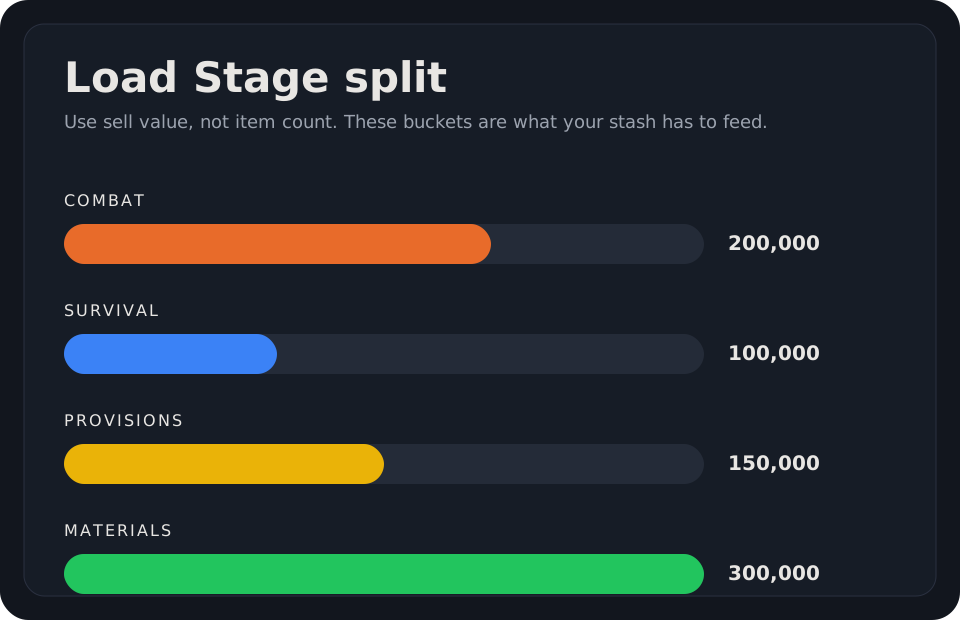
Load Stage wants vendor sell value in four categories totaling 750,000 coins in our Expedition 3 snapshot: Combat 200K, Survival 100K, Provisions 150K, and Materials 300K. This page explains how to think about vendors, crafting, and loot sourcing rather than pretending there is one perfect shopping list.
Research note
ARC's economy shifts with patches. We intentionally do not claim authoritative "buy X from vendor Y" routes here unless Embark publishes them in official notes. Treat the advice below as community-observed planning guidance and confirm sell values and category tags on your client before you spend coins.
Vendor overview
The trader advice around Load Stage is mostly built from player observation. In broad terms:
- Lance is the vendor players most often associate with quick Survival and some Combat conversions. A common example is a Defibrillator costing around 3,000 coins but donating only around 1,000 value. Stitcher-style buys show a similar pattern.
- Celeste overlaps more with Materials and early Expedition parts, including items like Batteries, Steel Springs, and topside materials, often under daily caps.
- No vendor sells Provisions in the way players actually need them for Stage 5. Trinkets, Old World valuables, seeds, and other diamond-icon loot are still something you find in raids.
Why buying is usually inefficient
The strongest community consensus is that vendor buying loses you roughly a 3x efficiency ratio in many cases. You spend significantly more in coins than you get back in donation value. That makes vendors useful as an emergency conversion tool when time is short, not as your primary Stage 5 plan.
The practical lesson is blunt: you can sometimes buy your way into Combat, Survival, or a few Materials, but you cannot buy your way to Provisions. If Provisions is the weak category, you still need a real loot run.
Crafting efficiency beats buying
Crafting is usually the middle ground between looting and vendor panic-buying. The most repeated community tips are:
- Combat: Level 1 Kettles are the classic recommendation, with grenades also showing up as efficient conversions when you have surplus parts.
- Survival: Purple Mk I augments, basic bandages, herbal bandages, and light shields are common crafting answers.
- Materials: unrecycled found junk like Toasters, Water Pumps, Motors, and Rusty Gears often beats crafting for pure donate value, so avoid over-recycling before turning items in.
- Provisions: there is no meaningful crafting shortcut. This bucket is still loot only.
The rule of thumb holds up well: crafting beats buying; looting beats both for Provisions and high-tier valuables.
Practical workflow
- Measure the gap per category using the Load Stage budget planner or the checklist.
- Protect high-effort items before mass-selling for coins. Check whether an item is still needed for earlier Expedition stages or for the kits you want to keep through the window.
- Stabilize with repeatable farms. Pair category deficits with routes you can run tired: see best maps and stash value farming.
- Use vendors late and deliberately if time is short and coins are abundant. Buying early usually burns value you could have turned into better donations elsewhere.
Current community planning still revolves around roughly Combat 200-250k, Survival 100k, Provisions 150-180k, and Materials 300k. Treat that as a guide, not a permanent law.
Community tools people actually use
- arc-raiders-mastery.web.app for a free Expedition planner and stash-value calculator with community-maintained item pricing.
- Google Sheets shared in Expedition YouTube guides for crafting-cost vs. donate-value tracking.
- Reddit cheatsheets comparing inventory space against donation efficiency.
We do not mirror those tools directly on this page, but they are why Stage 5 planning is much more mature now than it was in the Expedition 1 era.